When adults speak themselves out of dance, the tale is usually the exact same. I'm too old. I missed my home window. My knees are not what they made use of to be. I'll look outrageous. After two decades coaching adult newbies and working dancers, I've discovered those lines are a smokescreen for something deeper. Grownups do not do not have rhythm or possibility. They do not have consent. When you give on your own consent to discover, dance training quits being a fantasy and starts coming to be a trustworthy technique that transforms your body, steadies your mind, and rebuilds confidence from the ground up.
The actual barriers aren't physical
I have actually taught people who had not worked out in 10 years and people who ran marathons. Both teams dealt with the very same thing throughout their initial session: letting themselves exist. Grownups carry a complete knapsack of judgments right into the workshop. You contrast your hips to the trainer's, your foot rate to the teenager from down the block, your balance to a dancer on Instagram. That contrast eliminates more progression in week one than limited hamstrings ever before will.
Physical restrictions issue, yet they are understandable with smart Dance Training, and grownups often adjust faster precisely because they listen. You tell a 35-year-old to unlock the standing knee and stack ribs over pelvis, and they refine it. You suggest they exhale into a turn and they feel the modification quickly. The grown-up advantage is interest. Utilize it and your body will certainly respond.
What adjustments in your body, precisely
Let's pass obscure pledges and talk devices. Dance is arranged motion under rhythmic constraint. That one-of-a-kind pairing promotes sychronisation, strength, and mobility while maintaining your attention involved enough to repeat. Rep is where the change lives.
- Strength and power: Also "light" designs like novice modern or salsa tax obligation your glutes, calf bones, and deep core. Small dives and duplicated directional modifications build type II muscular tissue fibers without the grind of heavy weights. In six to 8 weeks of consistent training, the majority of adults observe firmer legs and a steadier midline, determined not by a mirror but by the ability to hold a balance after a turn they used to stumble. Mobility with control: Professional dancers don't stretch to tumble right into a split for Instagram. They chase array they can use. A lunge with a spiral, a slow développée to 45 degrees, a put on hold reach in a tendu, all build movement regulated by muscle mass action. That sort of flexibility is resistant. It safeguards joints under lots and reduces the "modify" incidents that haunt weekend warriors. Balance and reflexes: Proprioception improves when your feet speak with the flooring. Turnout or parallel, sneaker or bare foot, you'll learn to really feel weight, not guess it. After a month, stairways feel simpler and you quit grabbing the handrail reflexively. I have actually seen new moms and dads restore their capability to hold a young child on one hip without their lower back complaining, merely due to the fact that fall-prevention reflexes sharpened. Cardio without fear: A two-minute across-the-floor combo with 3 direction changes and a half-dozen turns spikes heart rate, after that allows it recover. It's interval training dressed in music. Many grownups can include 10 to 15 beats per minute to their sustainable dancing rate within a season while reporting much less perceived exertion, due to the fact that rhythm distracts and breath patterns straighten with phrasing.
If you desire numbers, use what you can gauge. Track relaxing heart price initial thing in the early morning for eight weeks. Note your single-leg balance time, eyes open, on both sides. Action ankle dorsiflexion with a knee-to-wall examination. Progression will show up in chilly numbers long prior to your good friends see your posture.
The peaceful work your mind does while your body moves
Dancing taxes working memory and pattern recognition. You're mapping matters to activity and movement to space. That's not subordinate. It's cognitive training with sweat. Adults who dance discover to swap self-criticism for debugging. Did you miss out on the turn? You inspect your place, the press from the flooring, the breath on the prep. You change one variable and attempt once again. That psychological model moves to your day job.
Mood shifts, as well. The mix of songs, community, and repeated ability procurement knocks down stress hormonal agents. I have actually had lawyers show up weak from a 12-hour day and leave softer, not since the globe altered, yet due to the fact that for 75 minutes they were enabled to be symbolized. There is alleviation in stopping working securely on count five and trying once more on count one.
Confidence is not a poster on the wall surface. It is countless micro-proofs that you can do what you stated you would certainly do. Dance offers you that tempo. You guarantee on your own 2 classes a week. You turn up. You find out an action that made you panic last month. You grin at your very own progression. That stacks.
But what concerning the knees, the back, the fear
I listen to these worries weekly, and the answers are practical, not motivational.
Knees: The majority of knee discomfort in new professional dancers is not architectural. It's a torque problem. Yield must originate from the hip, not the knee. Soft knees, weight over the center of the foot, and progressive lots dosing solution 80 percent of "my knees dislike me" cases. If you have diagnosed concerns like crescent rips or arthritis, you can still dance with alterations. Limitation deep pliés. Usage smaller sized varieties, more rate. Choose footwear with a rotating sole for hip hop or salsa to avoid grinding the knee.
Lower back: Pain often indicates a hips that's slanted forward, ribs flared, or a behavior of cranking turns from the spine as opposed to the flooring. Train your exhale. If you can count 4 steps on a lengthy exhale without raising your ribs, your spine will thanks. Enhance hip flexors at mid-range and glutes through tidy hinges, not simply clamshells. Many adults marvel just how swiftly back tension reduces when their breath and hips get reacquainted.
Fear of looking silly: Everyone is too hectic fixing their own body to judge your own. Walk into a newbie class and you'll see people shedding the combo, laughing, and attempting once more. If a studio ambiance really feels performative, leave. The best space for adult beginners is skill-focused and coachable, not a showcase for the teacher.
Picking the appropriate style for your goals and personality
You can change with any design, yet every one trains your body in a different way and suits different temperaments.
Ballet: Accuracy, placement, persistence. Don't buy the misconception that ballet is just for children. Barre job grooves posture and ankle joint strength. Center work educates spatial technique. You won't jump high in month one, and that's not the factor. Dancing re-shapes fundamentals that leak right into everything else you do.
Contemporary: Big motion with based changes. If you like the idea of rolling to the floor and back up without drama, this is home. It educates fluid power and educates you to ride energy, an ability that makes daily life really feel smoother.
Hip jump and road designs: Rhythm, groove, and quick maneuvering. These courses educate you to rest into the beat and to possess room. Anticipate cognitive load from intricate patterns. If you're easily burnt out, the range here hooks you.
Salsa, bachata, and social styles: Partnering skills and social self-confidence. Maneuvering drills silently upgrade your calf bones and arcs. Lead and comply with dynamics instruct you to communicate with touch and timing, not compel. You'll meet people. You'll likewise find out to unwind your upper body, a present for desk-bound adults.
Tap: Musicality with ankle strength. It looks enchanting up until your calf bones shed and your mind hums at 120 beats per min. If you like the idea of playing percussion with your feet, tap sharpens timing like nothing else.
If you can not commit to one, cross-train. I've watched a hesitant adult take one ballet course weekly for pose and one salsa evening for pleasure, and their progression in both fed each other.
How to begin without stressing out or exploding your schedule
Most grownups press also hard in week one, tweak something, then ghost. Start smaller sized than you think.
- Choose 2 sessions each week for 6 weeks. That may be one Dance Training class plus one home 20-minute principles session. Uniformity beats intensity. Allocate 10 mins pre-class to cozy joints you prepare to utilize. Ankle joints, hips, and thoracic spine respond best to reduce, active arrays. Conserve the lengthy stretches for afterward. Keep a straightforward log. Date, class kind, one point that enhanced, one point to work with. That keeps you honest and curious. Cap "brand-new relocation" fascination. Spend no more than 15 mins outside course boring a single motion pattern. Quit while it still feels playful. Schedule one healing practice you enjoy. A walk with hills, a brief flexibility series, or a bathroom with a publication. If you just grind, you will certainly quit.
The initially six weeks: what to expect and exactly how to navigate plateaus
Week 1 to 2: Bewilder and awkwardness. Your mind is hectic mapping. You'll leave class sweaty and confused, then arbitrarily nail the combination in your kitchen area 2 days later on. That's consolidation. Let it happen.
Week 3 to 4: The uniqueness wears off. You could feel like progress stalls. This is your initial plateau, not a sign you lack skill. Ask your teacher one targeted concern per class. As an example, "My inside turn passes away after one transformation. Should I transform my prep or my area?" Uniqueness gets you a sign you can apply instantly.
Week 5 to 6: Capability eludes control. Your legs and lungs really feel better, but your timing lags when the music quicken. Change your attention to paying attention. Slap or step the matters prior to you relocate. I ask beginners to speak via pass over loud. It feels silly, and it works.
As for plateaus, don't fixate on intensity. Adjust the variable that's lagging. If your precision falls apart when you press rate, slow down and add clarity. If you never sweat, raise your variety or amplitude. If you constantly toenail course combinations yet freeze in social settings, method brief improvisations at home to develop decision speed.
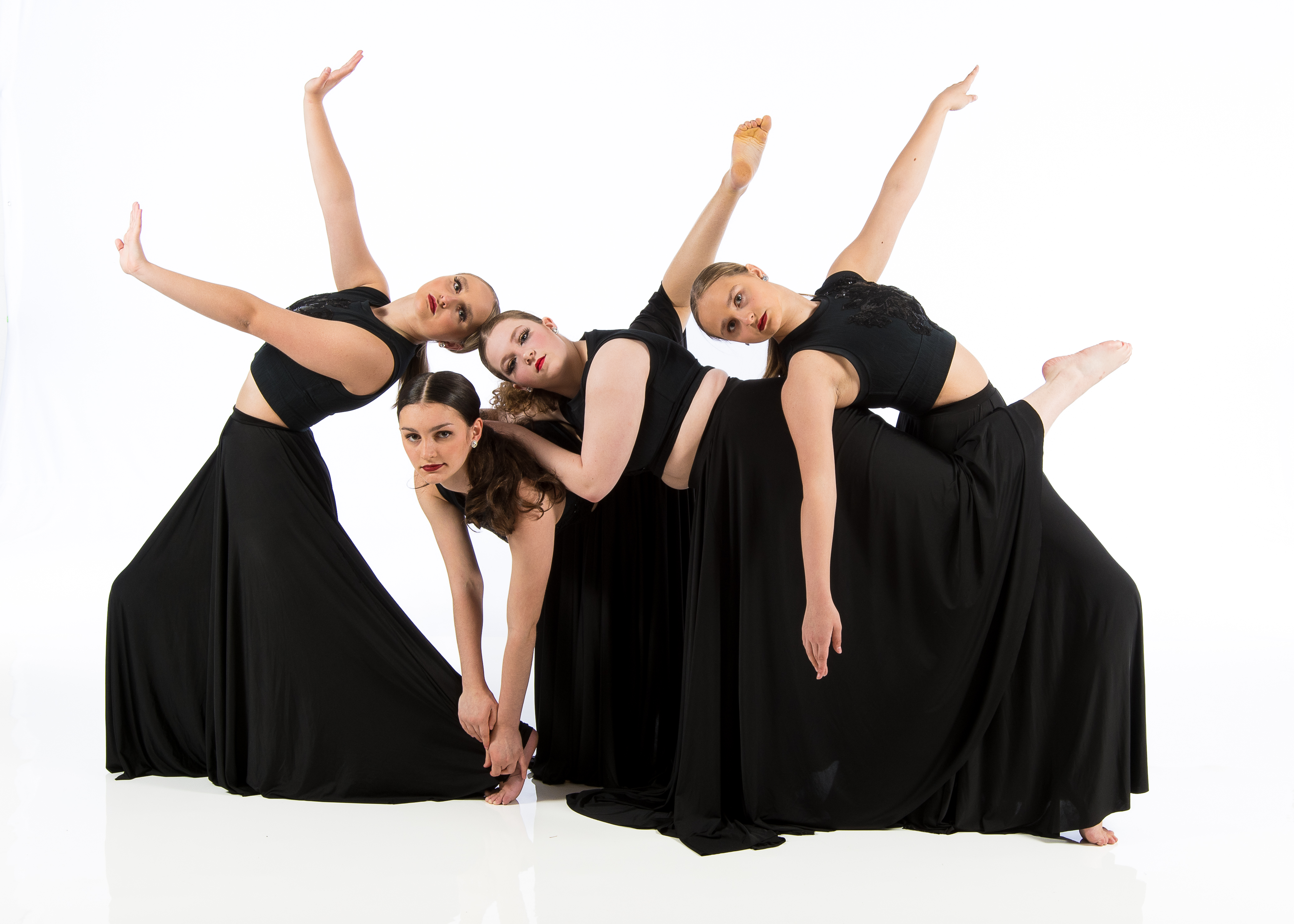
Form, not style: method that safeguards and elevates
There are a handful of technological checkpoints that divide delightful, sustainable Dance Training from injury roulette.
Foot stress and tripod Dance training ground call: Your foot has three pressure factors, heel, huge toe mound, and little toe pile. Keep them in play, even while turning. If stress falls down to the within or outside, your knees pay the price.
Neutral-ish pelvis with breath-led bracing: Neutral is a variety, not a secured placement. Allow your exhale narrow your waistline and resolve your ribs. Supporting that begins with breath holds up under movement. Supporting that begins with a capture fizzles as soon as the expression obtains long.
Spotting and head discipline for turns: Your eyes lead. If you're woozy, you're late or you're moving the head as design, not as a device. Practice sluggish quarter turns and reset the eyes like a metronome. Increase rate only when the eyes struck the target cleanly.
Use of plié: Also if you never ever take ballet, plié is the shock absorber that turns clumsy into regulated. Superficial plié prior to direction changes conserves your joints and assists you sit into rhythm. Deep plié is not better. Clean timing is.
Ribcage over hips over foot: Piling is the simplest repair for balance. If you feel off, run a fast scan. Are your ribs flaring? Is your pelvis put forward or put under? Are you on your toes without intent? Stack and the wobble drops.
A short tale from the floor
A client named Erin, 44, software application lead, came in after a years of telling herself dancing was for an additional life. Her initial objective was moderate. Two courses a week, beginner hip hop and newbie contemporary. The initial month was unpleasant. She asked forgiveness after every combination. We banned the word sorry for 6 weeks. She found out to ask far better questions. Not "Why am I negative at this?" yet "Where should my weight be before the slide?"
By month 3, she could groove on the beat and catch the basic accents. Her resting heart price dropped from 72 to 64. The genuine change took place at a social. She danced with 3 complete strangers, laughed at two misfires, and maintained going. At work, she started presenting without gripping the lectern. She attributes dance with that adjustment, not as a result of magic, yet due to the fact that she exercised failing publicly and recovering with a smile. That is confidence repotted in a brand-new container.
Training like an adult: respect cycles and seasons
Your ability will certainly ebb with work due dates, traveling, and life. A pro professional dancer cycles training deliberately. Adults can borrow the exact same logic on a smaller sized scale.
Build weeks: A couple of courses, one home session, optional cross-training. Somewhat higher volume and intricacy. You'll feel pleasantly invested, not wrecked.
Deload weeks: Lower volume by a third. Keep strength basically bites. Utilize the moment to consolidate skills, review fundamentals, and let tissues catch up. If you never ever deload, your nerve system eventually takes a getaway for you, normally throughout a combo.
Skill periods: Select a three-month focus. Possibly it's turns, perhaps it's footwork clearness, maybe it's musicality. Then hold on your own to that emphasis. Selection is fun, but progression loves specificity.
If your life throws a problem week at you, do not go away. Do a 15-minute home session. Watch a choreography and walk through it slowly. Maintain the string. Grownups who shed the string spend two times the energy returning to.
Building your home: very little equipment, maximum payoff
You do not require an at-home workshop to train. Clear a six-by-six foot area. A mirror assists, but a phone video camera on a rack works equally as well. For flooring, wood or laminate is best. Avoid thick rugs that trip your feet. A set of encouraging dance tennis shoes or socks with silicone grips covers most styles. Maintain a small toolkit nearby: a lacrosse sphere for foot release, a light resistance band for hip job, and a yoga exercise floor covering for floor sequences.
Use music intentionally. For drills, slower tracks allow you layer method. For endurance, choose songs that climb up somewhat in tempo. Construct two playlists, method and play. The initial is where you function information. The second is where you relocate without micromanaging.
Coaching decorum and exactly how to get the most from a class
Arrive early enough to warm up and feel the area. Introduce yourself to the teacher and share any restrictions. Excellent educators change, but they need information. Stand where you can see multiple angles, not simply the instructor's mirror picture. If a sign doesn't land, request a various word. Some bodies reply to allegories, others to mathematics. I'll inform one dancer to think of pins under the heels and an additional to keep 60 percent of weight midfoot. Both signs do the same work for different brains.
Film on your own when allowed. The video camera is extremely reasonable. You'll see precisely where your weight lags and where your focus declines. See once as a good friend, not a critic. After that choose one repair and run it again.
Nutrition and recuperation without obsession
You do not require a dancer's diet regimen to dance. You need gas that supports initiative and healing. A little carb and healthy protein snack 60 to 90 mins before course helps a lot of adults: yogurt and fruit, toast with peanut butter, a banana and a protein shake. After class, eat a dish within 2 hours. Moisten greater than you assume. Studios are dehumidified and sweat sneaks up on you. If pains or headaches hit, add a pinch of salt or an electrolyte tab.
Sleep is your multiplier. Adults that train on 5 hours delay, not due to the fact that they do not have determination, however since memory combination and tissue repair need time. Go for a balanced timetable also if the total is incomplete. If you can't extend sleep, include a 20-minute wind-down that signals your nerve system to downshift. Boosts the wall surface, a couple of sluggish breaths, no displays. Boring wins.
When the goal is not the stage, yet a richer life
You do not owe any person a performance. Plenty of grownups train for the private pleasure of skills and connection. Dance feeds components of you that a treadmill never touches. It educates you to lead and to follow, to hold your own axis and share room, to listen with your skin. Those skills make families calmer and teams sharper.
If you desire exterior pens, there are choices: a workshop display, a social dancing evening, a friendly fight, a community playhouse audition. However the truest pen is the day you notice that a tune you used to listen to now moves with you like a present. You locate your pose on the train without initiative. You capture your child's persuade in the kitchen area and persuade with them. You understand you are not viewing your life from the stands. You get on the floor.
Choosing a workshop and a teacher you can trust
Look for areas where adjustments have to do with technicians, not individuality. View a class prior to you join. Do trainees smile and stop working forward, or do they reduce? Ask about level positioning. A significant studio shields you from monotony and from being tossed right into water you can't take a breath in.
Pay attention to pacing. Excellent beginner classes don't drag, but they leave air for inquiries. The instructor demonstrates from several angles and names where the weight goes. They drill essentials without apology. If the class is an efficiency with the teacher as the star, it's not training.
Finally, learn dance in Tigard check logistics that make your brand-new habit practical: class times that fit your schedule, commute you can deal with, rates you can sustain. If it's a logistical problem, you will stop. Keep the barrier reduced and your momentum will grow.
Turning "one day" right into a day on the calendar
Pick a design that sounds fun, not excellent. Acquire the pass. Block your calendar for the following 4 weeks. Inform one good friend, not for responsibility movie theater, but to shield the time. Show up. When you feel clumsy, smile and keep moving. When your knees whisper, adjust your angles. When your mind screams you're late to the event, keep in mind that the only people ahead of you are the ones who started last month.
Dance Training isn't a wonder remedy. It's a reliable craft. It appreciates initiative and incentives focus. Beginning today and in a couple of months your body will stack cleaner, your breath will certainly ride the music, and your confidence will certainly stop asking permission. That improvement is not reserved for prodigies or young people. It belongs to anybody going to declare it.
Business Name: Doty Performance Website: https://www.dotyperformance.com/ Phone: +1 (503) 822-5276 Address: 20345 SW Pacific Hwy #306, Sherwood, OR 97140, United States About Doty Performance: Doty Performance is a dance studio in Sherwood, Oregon that offers a variety of dance programs for all ages and levels of dancers. We have classes for Ballet, Tap, Jazz, and Hip-Hop. So if you are looking for a dance studio near me that welcomes all skill levels, ages, and genders, look no further than Doty Performance dance studio.